
The 3 Levels of Meditation: From Mental Hygiene to Spiritual Evolution

Why Meditation Feels Difficult
Often, people find it difficult to meditate. Not because it is complex, but because they have never learned to sit still and turn their awareness inward. The moment they try, distraction takes over and restlessness shows up. Sitting quietly feels uncomfortable.
So meditation is pushed aside. It feels like something good to do, but not essential.
In reality, it is as important as brushing your teeth. You may skip it, but over time, the effect shows.
The Hidden Mental Load
Throughout the day, we interact with people, situations, and environments. In the process, we absorb scattered and disturbed energies.
At the same time, we create disturbance within ourselves through continuous thinking, emotional reactions, pressure to perform, the need for appreciation, and the constant drive to succeed.
This builds an invisible mental load. Even when the body rests, the mind continues.
That is why we feel drained without a clear reason. It is not always physical tiredness. It is exhausted and distorted energy.
Meditation helps reset this.
Level 1: Hygiene Meditation
This first level is simple. 10 to 15 minutes, morning and evening.
This is hygiene meditation.
The evening meditation helps release what is unnecessary before sleep and settles the mind. The morning practice retunes the brain and mind so you can function better during the day.
At this stage, meditation is not about deep experiences. It is about maintaining balance.
Just like brushing your teeth, it keeps things clean so problems do not build up.
Level 2: The Aspiring Level
The next level begins naturally. Once you are steady with the hygiene level, you start feeling the need to sit longer.
Meditation is no longer just for clearing the mind. You begin to use it to improve yourself.
This is the Aspiring level.
The duration extends to around 30 minutes, twice a day. The effects become clearer. The mind is less scattered and energy is more available.
You start noticing better clarity in thinking and more balance in action. You begin to sense when to act, how to act, and when to hold back.
Productivity improves, not by pushing harder, but because there is less inner noise.
Level 3: The Super Aspiring Level
As this stage a deeper shift begins. The desire to meditate longer comes naturally from the Soul. The soul loves to meditate.
This is the Super Aspiring level.
Meditation now extends to 45 minutes, one hour, or more. It is no longer only about improving the mind. It begins to open deeper inner experience.
One begins to become aware of a larger reality beyond the tangible material world as we know it.
This is where spiritual evolution begins.
How the Shift Happens
This shift from one stage to another does not happen suddenly. It is gradual.
In the beginning, there are days when you sit longer than usual. These are small spikes. Over time, if they become steady, they move you into the next stage.
But this depends on consistency.
If you are not steady in your base practice and you miss sessions, then longer meditation only helps clear accumulated disturbance. It does not move you forward.
It is like sleep. If you miss sleep, the body compensates later. But that is recovery, not growth.
The real shift happens when longer meditation builds on a stable base. When your regular practice is steady and you extend beyond it, those extra minutes deepen the system.
Over time, what was extra becomes normal.
A Simple Way to Look at It
Meditation is not about sitting longer from the beginning.
First you cleanse.
Then you strengthen.
Then you evolve.
That is how the journey unfolds.
The Path to Preparing for Kriya Yoga
Preparation Phase
A Kriya Yogi, here referring to those who follow the teachings of Paramhansa Yogananda, begins meditation with the Hong Sau technique. It is a simple, step-by-step method that helps bring focus inward and removes the ambiguity often found in general meditation practices.
At this stage, the focus is to build consistency. One should reach the Aspiring level and maintain a regular practice for a couple of months. This helps stabilize the mind and energy.
Training Phase
Once this foundation is in place, one can apply to learn the next stage of Kriya Yoga.
This training phase usually takes around six months or more. During this time, the practitioner learns supporting techniques, understands the Guru’s teachings more deeply, and strengthens regular practice.
The aim here is not to rush, but to become steady.
Initiation
As the practice matures and becomes steady in the Super Aspiring level, one becomes ready for initiation.
When approached in this way, the journey into Kriya Yoga remains steady and sustainable, allowing the practice to deepen naturally over time.
Conclusion
Meditation is not a one-step practice. It is a gradual journey. You begin by bringing order to the mind, then you build inner strength, and over time, you move toward deeper spiritual growth.
What matters is not how long you sit on day one, but how steadily you build the practice. When the foundation is strong, everything else follows naturally.
Kriya Yoga is the deeper path that this journey leads toward. The initial stages of meditation are important because they prepare your system to receive and sustain that path.
If you are beginning, focus on building consistency at the hygiene and aspiring levels. This creates the stability required for deeper practices.
To support this preparation, you can begin with A Beginner’s Guide to Prana or Lifeforce Mastery along with the workbook. It provides a clear understanding of how energy and mind work, and how to build a steady practice.
If you need further guidance along the way, feel free to write to me at amrita@yogievolve.org.
Approach this step by step. Build steadily. When you are ready, the next stage of Kriya Yoga unfolds naturally.

Amrita Ghosh
YogiEvolve
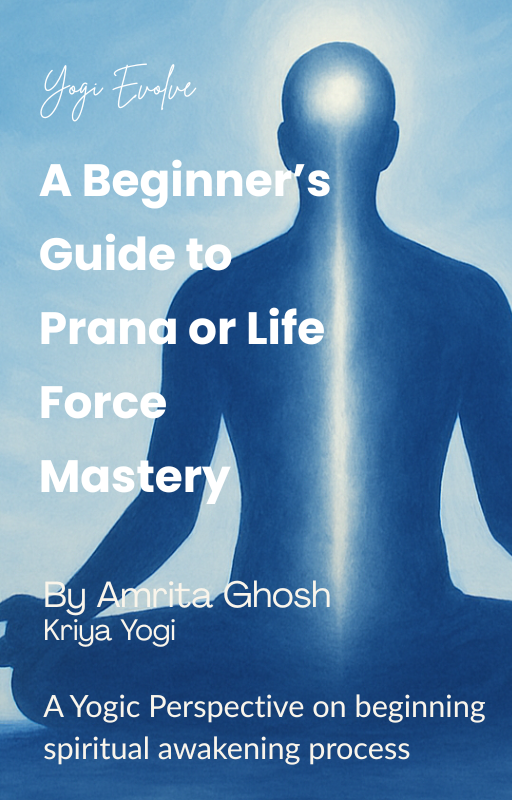
Your first step toward inner awakening — a yogi’s guide to transforming energy & life.
Based on the teachings of Paramhansa Yogananda.
Now Available at Amazon Kindle
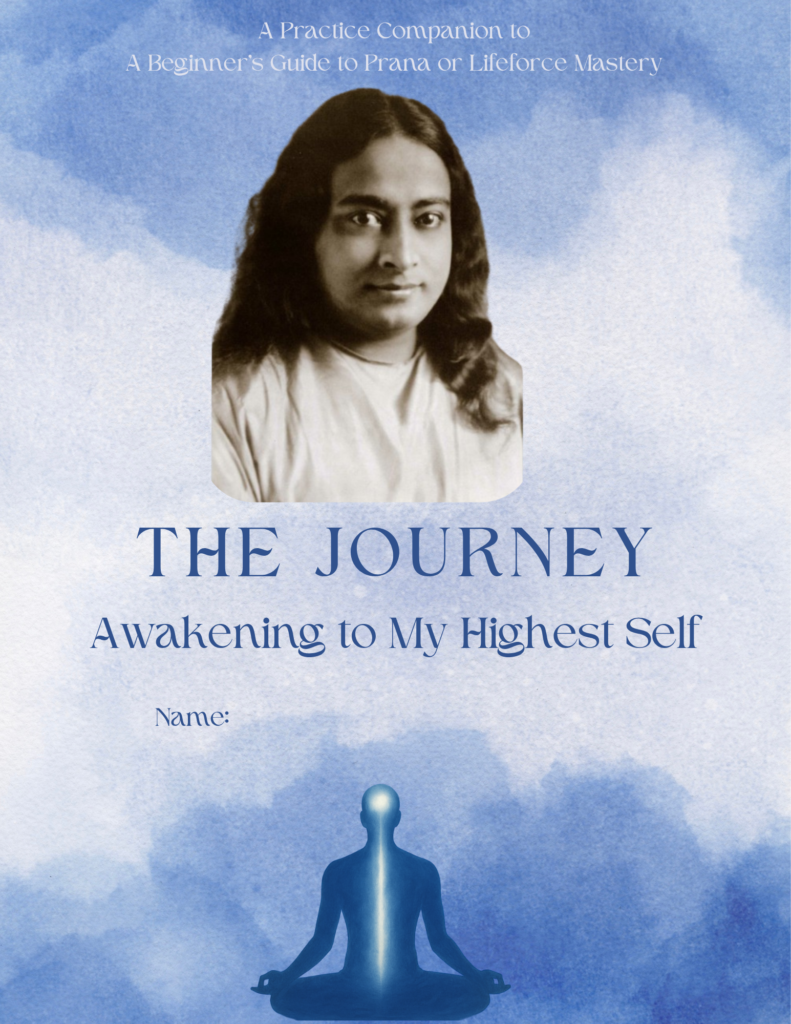
Deepen Your Practice with the Companion Workbook
A guided companion workbook designed to deepen your experience of A Beginner’s Guide to Prana or Life Force Mastery.
Explore More Post from the Author
The 3 Levels of Meditation: From Mental Hygiene to Spiritual Evolution
Meditation is not a single practice but a gradual journey. It begins with simple mental hygiene, grows into clarity and inner strength, and eventually leads toward deeper spiritual evolution.
If meditation feels difficult or ineffective, you may be approaching it the wrong way.
Understanding these three levels helps
Healing the Heart: Moving from Suppression to Transmutation
What we often call healing is not always true healing. It is the mind learning to function while the hurt remains within.
Paramhansa Yogananda taught that real transformation does not come from suppression or mental effort, but from a deeper inner process that shifts the very flow of lifeforce.
This
9/9 Multiverse in Indian Cosmology: Evolution through Kriya Yoga
The return journey of the Jiva is a movement from karmic density back to divine awareness.
Kriya Yoga accelerates this evolution. Instead of passively observing thoughts, the Kriya Yogi actively raises life-force to the Spiritual Eye, transmuting large accumulations of tamasic karma into higher consciousness. What may take countless births
8/9 Multiverse in Indian Cosmology: The Evolution of a Soul (Jiva)
The Atma is eternal and complete. It does not evolve. What evolves is the Jiva — consciousness identified with body and mind — moving through Lokas under the influence of karma and the three gunas.
As the Koshas gradually refine, clarity, discrimination, and alignment with Dharma naturally increase. Spiritual growth
7/9 Multiverse in Indian Cosmology: Many Brahmas, Many Brahmandas
The multiverse described in Indian cosmology is not a collection of identical parallel worlds repeating the same individual in endless variations. It is an infinite unfolding of consciousness, expressed through countless Brahmandas, each governed by its own guna composition and cosmic architecture. Within each Brahmanda, roles recur across vast cycles
6/9 Multiverse in Indian Cosmology: The Question of Aliens
Are aliens visiting Earth?
It is a question that has captured modern imagination for generations. But ancient Indian cosmology approaches the issue very differently.
The texts describe travel across realms, yet this movement is not primarily mechanical. Highly evolved beings relocate through consciousness itself. Others generate protective vibrational enclosures