
What Is Kriya Yoga? Understanding the Kriya Yoga Taught by Paramhansa Yogananda

The YouTube version is lighter representation of this article. In this article we explore in depth.
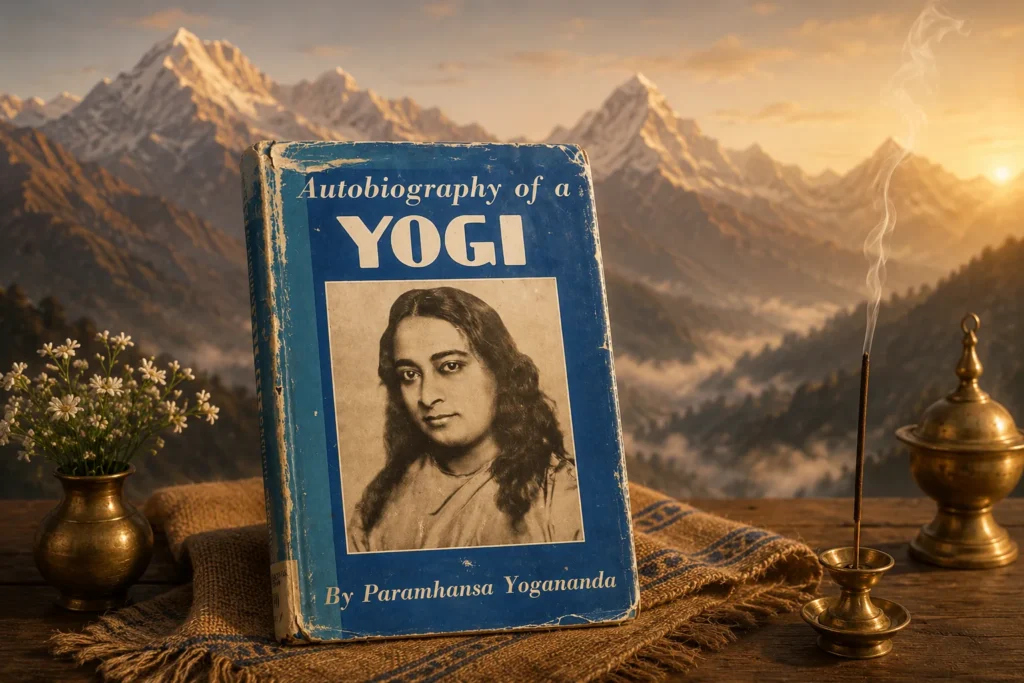
Kriya Yoga became known to millions of spiritual seekers through Paramhansa Yogananda and his autobiography, Autobiography of a Yogi. For many, the book is their first encounter with Kriya Yoga—and for some, it becomes the beginning of a lifelong spiritual search.
Yogananda described Kriya Yoga as a direct and systematic science of Self-realization and made extraordinary statements about its potential to accelerate spiritual evolution. It is therefore natural for a sincere seeker to want to understand what this Kriya Yoga is and how it is practiced.
Yet when a seeker begins looking for Kriya Yoga today, the picture can become confusing. Different sects and Gurus use the same name, but when we look closely at what they teach, it becomes clear that they are not always referring to the same spiritual system.
This raises a fundamental question: What exactly is Kriya Yoga, and which Kriya Yoga was Paramhansa Yogananda actually referring to?
The Sanskrit word kriya broadly refers to action or activity, and many yogic practices are therefore called kriya. This makes it difficult to identify the specific Kriya Yoga that Paramhansa Yogananda received and taught.
To understand what Yogananda meant by Kriya Yoga, we need to look beyond the name and understand the pranic science described in Autobiography of a Yogi.
This leads us to one of Yogananda’s most remarkable statements: that one Kriya is equivalent to a year of natural spiritual evolution. What did he actually mean by this? And why is this statement so often misunderstood?
Before we can answer those questions, we first need to understand what distinguishes the Kriya Yoga Yogananda taught from the many practices that share the same name.
The Kriya Yoga Yogananda Taught
One of the key criteria Paramhansa Yogananda establishes in Autobiography of a Yogi is that Kriya Yoga is received through a Guru-disciple lineage. It is passed from teacher to disciple through diksha, or initiation.
Yogananda devotes entire chapters to Mahavatar Babaji, Lahiri Mahasaya, and Swami Sri Yukteshwar. Through their stories, he shows how important this lineage is to the transmission of Kriya Yoga.
The lineage Yogananda describes begins with Mahavatar Babaji. In 1861, Babaji revived the ancient science of Kriya Yoga by initiating Lahiri Mahasaya. He then gave Lahiri Mahasaya permission to share Kriya Yoga with sincere seekers.
From Lahiri Mahasaya, the teachings passed to Swami Sri Yukteshwar, and from him to Paramhansa Yogananda. Through Yogananda, Kriya Yoga became known throughout the world. This lineage has continued to preserve and transmit the teachings to the present day. I belong to this lineage through disciples of Paramhansa Yogananda.
This lineage is not simply historical background. It helps us understand the particular Kriya Yoga that Yogananda received and taught. It also becomes important when we consider initiation and the extraordinary promises Yogananda made about the practice of Kriya Yoga.
Many seekers begin their search for a Kriya Yoga teacher after reading Autobiography of a Yogi or learning about Kriya Yoga through another source. But reading about Kriya Yoga and finding a teacher within this lineage are two different things.
Many seekers naturally want to find an Acharya with whom they can develop a personal connection. They want a teacher from whom they can learn directly. They want to be able to ask questions and receive personal guidance. This relationship between teacher and disciple has always been an important part of the yogic tradition.
But finding such a teacher is not always easy.
One option is to join a large, established organization. This can provide some reassurance that the teachings come through a recognized tradition. But a large organization also has its limitations. It can be difficult to develop a personal relationship with a teacher when teachings are offered to thousands of people.
There is another difficulty. When teachings are meant for a large audience, they naturally have to be standardized. They must be presented in a way that can be understood and followed by people at many different levels of spiritual maturity. In this process, some of the depth and personal guidance that a seeker needs may be lost.
For this reason, some sincere seekers begin looking elsewhere. They hope to find a teacher who can guide them more personally.
But this creates a different problem.
Outside the established organizations, there are many teachers offering many different practices under the name “Kriya Yoga.” Some may come from different traditions altogether. Others may teach practices that have little connection with the Kriya Yoga described by Yogananda.
So how does a sincere seeker know what is authentic?
As a Kriya Yoga teacher, I have met many sincere seekers who are genuinely confused about what Kriya Yoga actually is. This confusion rarely comes from a lack of interest or sincerity. More often, it comes from having too much information—and sometimes misinformation.
Much of this confusion begins with something surprisingly simple: the name itself.
The Sanskrit word kriya broadly means action or activity. The word has been used in different yogic traditions to describe different kinds of practices.
In Hatha Yoga, for example, kriya can refer to cleansing techniques and other practices involving the breath and prana. These practices have their own purpose and place within Hatha Yoga. But they are not the same as the Kriya Yoga taught by Paramhansa Yogananda.
The word kriya by itself, therefore, does not tell us which Kriya Yoga we are talking about.
We need a clearer way to distinguish Yogananda’s Kriya Yoga from the many other practices that use the same name.
This brings us to the central question:
What are the defining features of the Kriya Yoga that Paramhansa Yogananda actually taught?
Beyond the Name: Recognizing the Spiritual System
We need to go beyond the name “Kriya Yoga” and look at the spiritual system behind it.
Many teachers today use the name Kriya Yoga. Some refer to Mahavatar Babaji or Autobiography of a Yogi. They may also quote Paramhansa Yogananda, because many of the spiritual truths he shared are universal and deeply inspiring.
For a sincere seeker, this can easily create the impression that the Kriya Yoga being offered is the same Kriya Yoga that Yogananda taught.
But the name alone is not enough. We have to look more closely at the actual practices being taught.
When we do this, we sometimes find that the system includes pranayama along with practices drawn from mantra, tantra, Sri Vidya, Kundalini Yoga, or other traditions. These may all be valid spiritual practices in their own right. But if they come from different spiritual systems, bringing them together does not automatically make them Yogananda’s Kriya Yoga.
This raises a deeper question. Can we simply take practices from different traditions, combine the ones that appeal to us, and create a new spiritual system?
To understand why this matters, we need to understand how an authentic spiritual system is put together.
Every spiritual path has its own inner architecture. Its practices are not simply a collection of useful techniques. They are meant to work together. One practice prepares the seeker for another, and each stage supports the next stage of spiritual unfoldment.
We can understand this through a simple example from nature.
A plant may thrive in one particular environment because the soil, rainfall, temperature, sunlight, and surrounding ecosystem all support its growth. If we move that same plant into a very different environment, we cannot assume that it will thrive in the same way. It may struggle to survive. In some cases, an introduced species may grow too aggressively and disturb the balance of the new ecosystem.
The problem is not that the plant itself is bad. The problem is that it belongs to a particular ecological system.
A spiritual practice can be understood in a similar way. A mantra, pranayama, mudra, or meditation technique may be powerful within the tradition from which it comes. But that does not mean it can simply be inserted into another spiritual system without affecting the balance of that system.
This is what I mean by the vibrational architecture of a spiritual path.
Every authentic spiritual path has its own vibrational architecture. Its practices, principles, methods of preparation, and stages of initiation are designed to work together. Each practice has a particular purpose. Each prepares the seeker for what comes next. Together, they preserve the vibrational integrity of the system and guide the seeker toward the spiritual goal for which that system was designed.
This is why the practices belonging to a spiritual system cannot be altered or rearranged casually.
Making such changes requires exceptional spiritual authority. Only an Avatar who has walked that path, completed the journey to Self-realization, and attained full liberation can make such changes. Such a being does not alter a spiritual system through intellectual understanding, experimentation, or personal preference. The authority comes from having completed the spiritual journey and knowing the path in its entirety at vibrational level.
For everyone else, adding, removing, or rearranging practices can change the system itself.
A modified system may still produce experiences. It may feel powerful, comforting, or even dramatic. But spiritual experiences alone do not tell us where a path ultimately leads. If the architecture of the system has been changed, we can no longer assume that it will produce the result promised by the original path.
This is why authenticity cannot be determined by the name “Kriya Yoga” alone.
The real question is whether the practices, principles, and method of transmission belong to the same spiritual system that Yogananda taught.
And this brings us back to one of the clearest criteria: diksha.
A teacher claiming to transmit the Kriya Yoga of Paramhansa Yogananda should have received initiation through that Guru-disciple lineage—from Yogananda himself or through disciples within his lineage.
The name “Kriya Yoga” may tell us where to begin our inquiry. The lineage, the practices, and the method of transmission tell us what spiritual system we are actually receiving.
Why Is Initiation Necessary?
Why is initiation necessary? Why can’t Kriya Yoga simply be learned from a book or a video?
This is probably the question I hear most often. And the answer is not simply about secrecy.
According to the Guru-disciple tradition, initiation involves more than learning a technique. The disciple receives the method of practicing Kriya Yoga along with a transmission of the Guru’s spiritual vibration through the lineage. It is this combination of the practice and the living transmission through the lineage that gives this particular Kriya Yoga its capacity to accelerate the soul’s spiritual evolution.
The discipline of secrecy surrounding initiation helps preserve the sanctity of this transmission. It also creates a relationship of sincerity, reverence, and commitment between the disciple and the practice.
The Guru, however, does not do the spiritual work for the disciple. The Guru’s role is that of a catalyst Just as certain processes in nature need a catalyst to accelerate them, contact with a higher spiritual vibration can help awaken and accelerate a seeker’s own spiritual potential.
This is why the Guru does not necessarily need to be physically present for the transmission to continue through the lineage. A sincere disciple who has received Kriya Yoga through the lineage, faithfully follows the system, and has assimilated its spiritual vibration can, in turn, transmit it to those who sincerely come to the path.
But what does this transmission actually mean?
A simple analogy can help.
Many of us performed an experiment in school using a magnet and iron filings. The iron filings already contain the potential to become magnetized, but their particles are initially disordered. When placed in the presence of a magnet, they gradually align themselves with its magnetic field.
In a similar way, the disciple already carries the potential for higher states of consciousness. The Guru’s spiritual vibration helps bring the restless consciousness into greater alignment with that higher potential.
The Guru does not make the journey for us. We still have to practice, develop discipline, and walk the path ourselves. The Guru’s role is to awaken what is already possible within us and guide us toward the realization of the Self.
Like a loving mother who patiently guides her child toward independence, the Guru supports the disciple until the disciple can stand firmly in that realization.
This understanding of initiation becomes especially important when we consider one of the extraordinary promises Paramhansa Yogananda made about the accelerated spiritual progress possible through Kriya Yoga.
Understanding Yogananda's Promise
The question that comes up here is: Does every Kriya Yoga lineage produce the same results that Paramhansa Yogananda promised in his autobiography?
To answer this, we need to return to an important distinction we discussed earlier: the particular form of Kriya Yoga that Paramhansa Yogananda taught.
When Yogananda described Kriya Yoga as the “airplane route to Self-realization,” he was referring specifically to the system he taught his disciples. His statement should be understood in that context, rather than as a promise about every spiritual system that uses the name Kriya Yoga.
Yogananda received the original science through his Guru-disciple lineage. He then introduced preparatory practices and other elements that brought the science into the form he considered appropriate for the needs of modern disciples. As an Avatar who had attained full liberation, he had the spiritual authority and realization necessary to make these changes.
He did not simply add practices drawn from other systems. The additional practices were integrated in a way that augmented the vibrational architecture of the system he taught, giving that system greater power and reliability. The statements and promises Yogananda made about Kriya Yoga therefore refer specifically to the system he taught his disciples.
He was not making claims about the methods taught by other Gurus or traditions, because those were not the subject of his teaching.
This gives us a useful principle for understanding spiritual traditions: a Guru’s specific instructions, methods, and promises should be understood within the spiritual system that the Guru is teaching. They should not automatically be extended to other traditions simply because they use similar practices or terminology.
For a disciple, this means focusing on the teachings of his or her own Guru and understanding the specific methods and promises of that path within its proper context.
At the same time, the deeper principles of spiritual life are universal. Different Gurus may express or apply those principles in different ways within their respective spiritual systems, but the underlying spiritual truths remain.
With this understanding, one of Paramhansa Yogananda’s most remarkable statements in Autobiography of a Yogi becomes clearer.
Yogananda explains that one Kriya, which takes about half a minute to perform, produces the subtle spiritual progress that would otherwise require a year of natural evolution. He also writes:
“The yogi who faithfully practises the technique is gradually freed from karma, the universal chain of causation that binds man to bodily reincarnations.”
What does this extraordinary statement actually mean?
It is not something to be accepted through blind belief. It rests on a fundamental principle of yoga: the relationship between consciousness and prana, the life force.
Every thought, emotion, and physical action depends upon prana. As the life force becomes calmer and more refined, the mind naturally follows. Spiritual progress is therefore deeply connected with the state and refinement of prana. It is not produced merely through positive thinking or intellectual understanding. It involves a gradual transformation of consciousness through the control and refinement of the life force.
This is why Paramhansa Yogananda described Kriya Yoga as a science of Self-realization. Kriya Yoga provides a systematic way of working with the inner forces that influence consciousness. The Guru imparts the method, but each disciple must ultimately verify its truth through sincere and consistent practice.
The journey of Kriya Yoga begins not with accepting extraordinary claims, but with sincere practice and the willingness to discover the truth through direct experience.
The Two Defining Features of Yogananda’s Kriya Yoga
After all these distinctions, we can come back to a simple question: What should a sincere seeker actually look for?
If we are specifically talking about the Kriya Yoga taught by Paramhansa Yogananda, there are two key features.
The first is diksha through Yogananda’s Guru-disciple lineage. The teacher transmitting Kriya Yoga should have received initiation through this lineage and should be transmitting the same spiritual tradition that came through Mahavatar Babaji, Lahiri Mahasaya, Swami Sri Yukteshwar, and Paramhansa Yogananda.
The second is the complete system of practices that Yogananda gave to his disciples.
Yogananda did not teach Kriya Yoga as an isolated technique. He gave his disciples a complete suite of spiritual techniques, in which the different practices prepare and support the seeker at different stages of the journey.
This system includes Hong-Sau meditation and the Energization Exercises, followed by additional techniques given after discipleship initiation. Finally comes the Kriya Yoga technique itself, received through Kriya Yoga initiation.
These practices belong together. They form the spiritual system that Yogananda gave his disciples and within which he made his extraordinary promises about Kriya Yoga.
So for a seeker trying to determine whether a teacher is offering the Kriya Yoga of Paramhansa Yogananda, the question need not be complicated.
Is the Kriya being transmitted through Yogananda’s Guru-disciple lineage through diksha?
And:
Is the teacher preserving and teaching the complete system of practices that Yogananda gave his disciples?
These two criteria—the lineage of initiation and the integrity of the system—provide a clear way for a sincere seeker to look beyond names, claims, and spiritual experiences and understand what is actually being offered.
Other spiritual paths may have their own methods, lineages, and promises. They should be understood and respected within their own traditions. But if what we are seeking is specifically the Kriya Yoga of Paramhansa Yogananda, then we should look for the lineage and the system through which he chose to transmit it.

Amrita Ghosh
YogiEvolve
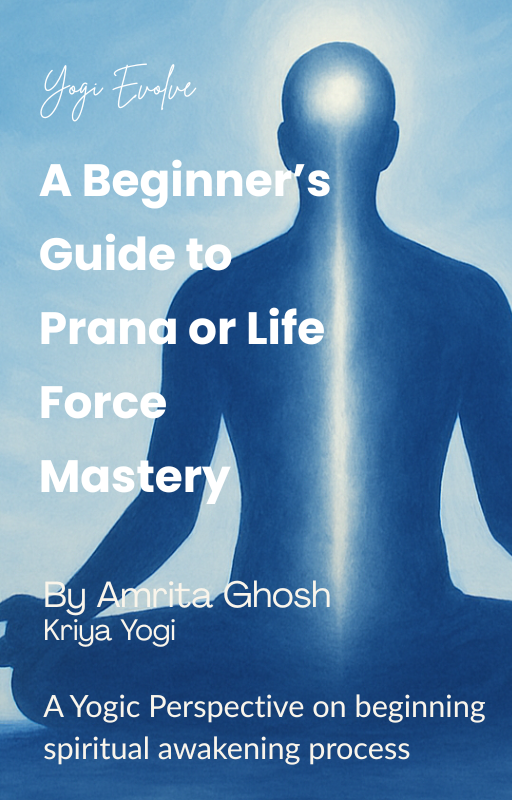
Your first step toward inner awakening — a yogi’s guide to transforming energy & life.
Based on the teachings of Paramhansa Yogananda.
Now Available at Amazon Kindle
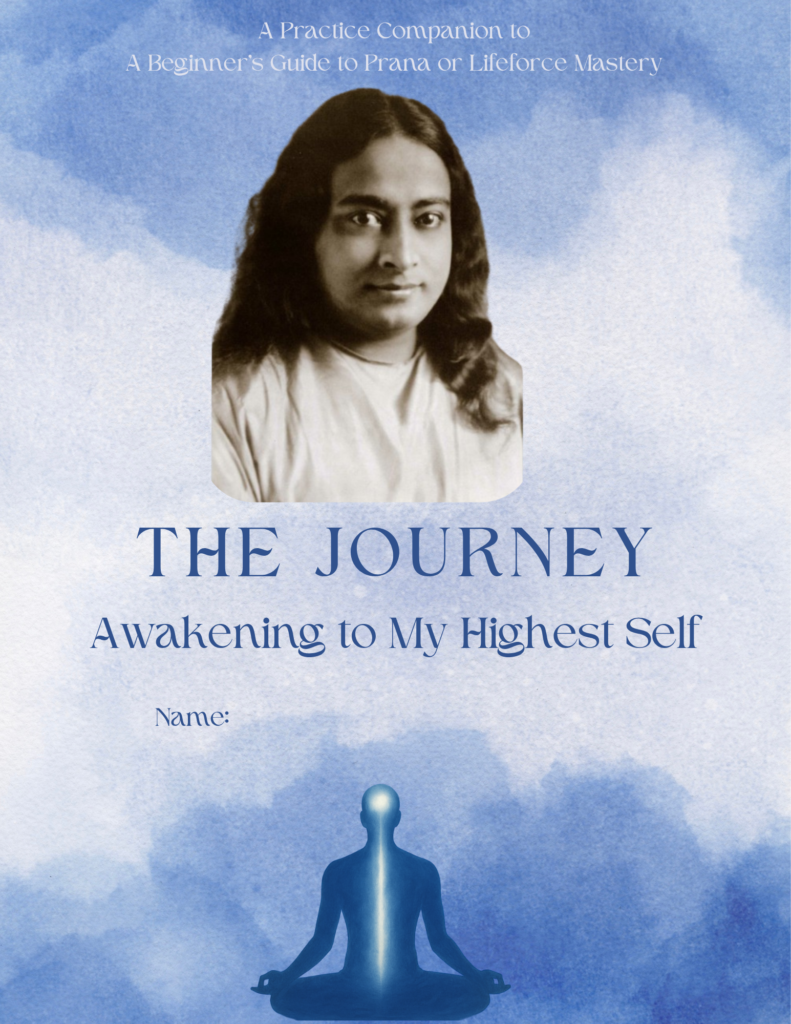
Deepen Your Practice with the Companion Workbook
A guided companion workbook designed to deepen your experience of A Beginner’s Guide to Prana or Life Force Mastery.
Explore More Post from the Author
What Is Kriya Yoga? Understanding the Kriya Yoga Taught by Paramhansa Yogananda
Kriya Yoga has become widely known through Paramhansa Yogananda’s Autobiography of a Yogi. Yet today, many different teachings and practices are offered under the same name. How can a sincere seeker distinguish between them—and understand what Yogananda actually taught and promised?
The Five Gears of Spiritual Growth
The Five Gears of Spiritual Growth I watched thousands of seekers enter a spiritual organization with great enthusiasm. Of those thousands, perhaps only two or three remained steadfast, and even among them, perhaps only one experienced deep, sustained spiritual transformation. Why do so many sincere seekers begin with dedication, yet
Kriya Yoga: The Forgotten Science of Self-Realization
Kriya Yoga is the forgotten science of Self-realization that has largely remained outside mainstream understanding for over 2,500 years. This article explores what was lost, why reviving it in today’s world is so challenging, and why preserving Master’s teachings without compromise lies at the heart of YogiEvolve’s mission.
Why Some People Seem to Fail in Spiritual Practice
Why do some people seem to progress rapidly on the spiritual path while others struggle, stagnate, or drift away? Drawing from years of working with students of Kriya Yoga under my Guru’s guidance, I explore a deeper perspective on spiritual growth, one that challenges our assumptions about success, failure, and
A Journey into the Inner World of a Kriya Yogi
This is a glimpse into the inner world of a new Kriya Yogi, as he gradually discovers the hidden siddhis, subtle powers, and inner wonders that unfold along the path of sincere spiritual practice.
The Purpose of Ego in Spiritual Evolution
What if the ego is not something to be overcome, but something that must be developed, directed, and spiritualized? Drawing on the teachings of Paramhansa Yogananda, this article explores the deeper meaning of Ahamkara and why individuality plays an essential role in the soul’s journey toward God-realization.