

For a beginner, consistency in meditation is essential, yet it is often the hardest part to establish.
The soul naturally inclines toward meditation, but in the beginning this inner call is very faint, easily overshadowed by the constant demands of daily life. It is just enough to spark curiosity, to try a technique, attend a class, or explore something deeper.
Yet against the constant demands of personal and professional life, this call feels subtle and easy to overlook.
So a beginner starts with intention, but slowly loses consistency, and sometimes stops altogether. In doing so, they remain in the beginner stage, unable to experience the deeper growth that only steady practice can bring.
Why Consistency Feels So Difficult
There are two main challenges when starting a meditation practice.
First, the pull of daily life is strong. The world is always asking for your attention. There is always something to handle, fix, or respond to, and it easily takes priority.
Second, expectations tend to be unrealistic. After hearing different teachers and perspectives, beginners often form a heightened idea of what meditation should feel like. They look for peace, clarity, or deeper experiences almost immediately.
When that does not happen, discouragement begins to creep in.
In reality, the benefits of meditation unfold over time. Its effects build gradually, and only through steady, consistent practice.
So the question is not whether meditation works, but how to approach it in the right way.
The Right Way to Begin
The first step is simple, but not easy: set the right expectation.
In the beginning, meditation can feel like almost nothing is happening. This is completely normal. What matters is setting a clear intention and staying consistent. Over time, you begin to feel divine grace supporting your effort and helping you stay on the path until your own steadiness is established.
Learning meditation is like learning any skill. It takes time and effort. Some may settle into it quickly, while others take longer. Comparing yourself with others only creates unnecessary doubt.
Stay with your own journey, and allow it to unfold at its own pace.
Understanding the Growth Curve
Consistency develops in stages.
• The first 2 weeks help you move past initial inertia
• Around 2 months, a natural rhythm begins to form
• Around 6 months, the practice starts to feel established
In the beginning, you may not feel any benefit or even much interest in meditation. But with regular practice over a few weeks, something starts to shift. You begin to notice a subtle inner shift, and a willingness to sit for meditation begins to arise.
The pull of the soul to meditate gradually strengthens, and that faint inner call becomes clearer and more steady.
Start Small, But Be Firm
To make this process easier, start small:
• 5 to 10 minutes
• Twice a day
Meditating twice a day is important. The morning practice prepares you for the day, and the evening practice helps release the restlessness and pressure that build up. This creates a natural feedback loop of improvement.
There is one important rule: do not allow inconsistency.
Even a single missed session creates resistance. The next sitting feels harder, and this is where many people begin to slip. Each missed session has to be made up later, which requires more effort and makes the practice feel heavier than it needs to be.
The Role of Environment and Will Power
Paramhansa Yogananda taught:
“Environment is stronger than will power.”
The environment constantly pulls your attention outward and keeps you engaged. If your will power is already in the habit of giving in, it weakens quickly. So in the beginning, a firm inner decision is necessary.
Make a clear note to yourself: missing is not an option.
This phase may feel like a struggle, but it is temporary and well worth the effort.
When the Shift Happens
After some months of steady practice, something begins to shift within you. The voice of the soul becomes stronger.
The effort needed to move past the demands of the environment reduces, and inner resistance starts to fade.
In this new phase, not meditating begins to feel uncomfortable. It feels as though something is missing, and a natural inner pull to meditate begins to arise.
At this point, the pull of the soul becomes stronger than the pull of the world.
The Natural Expansion
As this natural expansion happens, you begin to move through deeper stages of meditation. These three levels are: Hygiene Level, Aspiring Level, and Super Aspiring Level. You can explore them in detail here: The 3 Levels of Meditation: From Mental Hygiene to Spiritual Evolution
The way to move through these levels is through consistency. Even with just 5–10 minutes of regular practice, something remarkable begins to happen.
The practice starts to expand on its own.
• 5 minutes becomes 10
• 10 becomes 15
• The depth begins to increase naturally
There is no need to force it. The practice begins to grow organically, both in time and in depth. Your inner and outer environment gradually shifts to support this new rhythm. You start enjoying meditation, and it is no longer something you have to do, but something you naturally feel drawn toward.
Final Thought
The hardest part of meditation is not depth. It is developing consistency. Once consistency is established, everything else begins to follow naturally.
Start small and stay firm. Keep affirming to yourself, “I will succeed.” Do not let your enthusiasm drop. The start–stop–start phase is simply part of the process. This is how all learning happens, and with practice, steadiness develops.
With time, divine grace begins to support your effort. It comes quietly, but it always comes when you continue trying.
There is a story of a rock climber who was attempting to scale a cliff. At one point, he reached a ledge with a steep outward angle, where gravity worked against him in such a way that every attempt caused him to fall back down to the ledge below. He was stuck, unable to climb further and unable to descend. Alone in a remote place, with no way to call for help, his only option was to succeed.
He tried again and again, failing ten times. On the eleventh attempt, he felt as if an unseen force lifted him upward, beyond what seemed possible. He survived to tell the story because he refused to give up.
In the same way, persistence invites divine grace.

Amrita Ghosh
YogiEvolve
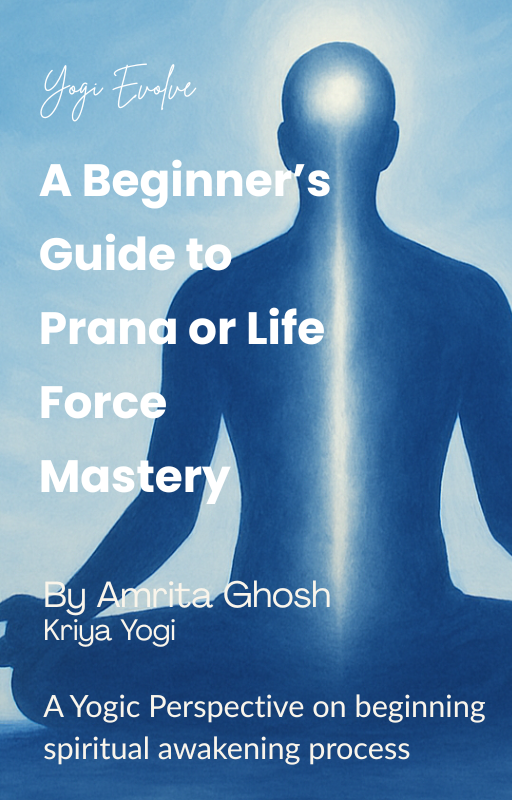
Your first step toward inner awakening — a yogi’s guide to transforming energy & life.
Based on the teachings of Paramhansa Yogananda.
Now Available at Amazon Kindle
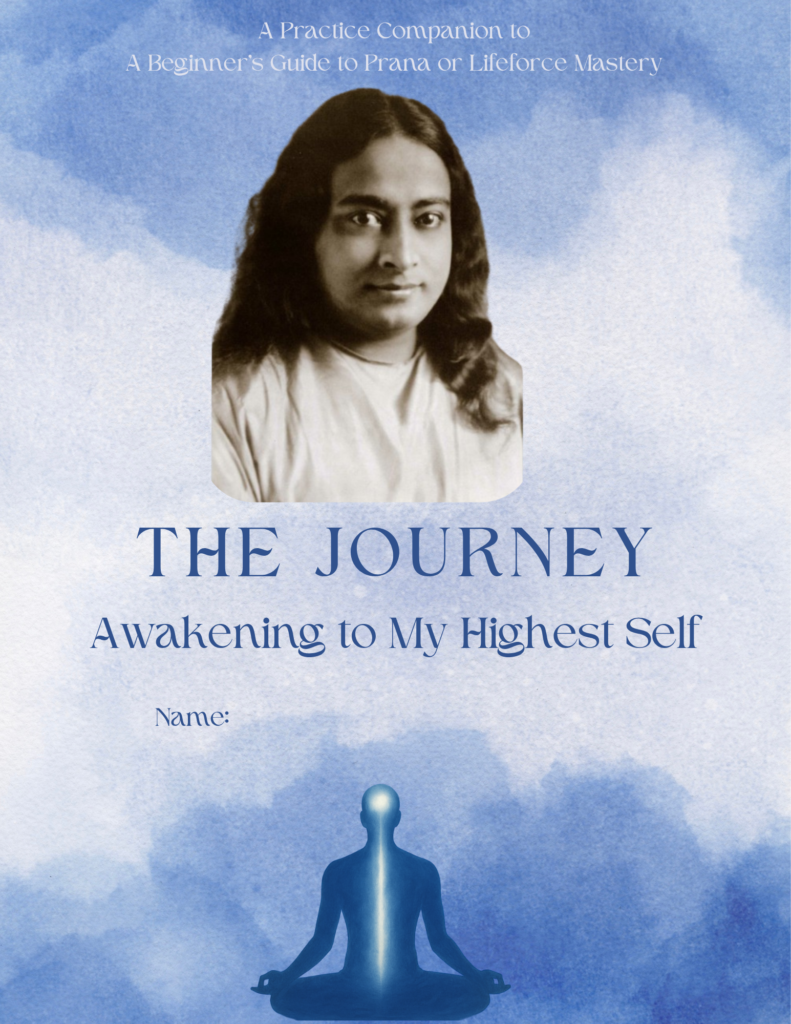
Deepen Your Practice with the Companion Workbook
A guided companion workbook designed to deepen your experience of A Beginner’s Guide to Prana or Life Force Mastery.
Explore More Post from the Author
What Is Kriya Yoga? Understanding the Kriya Yoga Taught by Paramhansa Yogananda
Kriya Yoga has become widely known through Paramhansa Yogananda’s Autobiography of a Yogi. Yet today, many different teachings and practices are offered under the same name. How can a sincere seeker distinguish between them—and understand what Yogananda actually taught and promised?
The Five Gears of Spiritual Growth
The Five Gears of Spiritual Growth I watched thousands of seekers enter a spiritual organization with great enthusiasm. Of those thousands, perhaps only two or three remained steadfast, and even among them, perhaps only one experienced deep, sustained spiritual transformation. Why do so many sincere seekers begin with dedication, yet
Kriya Yoga: The Forgotten Science of Self-Realization
Kriya Yoga is the forgotten science of Self-realization that has largely remained outside mainstream understanding for over 2,500 years. This article explores what was lost, why reviving it in today’s world is so challenging, and why preserving Master’s teachings without compromise lies at the heart of YogiEvolve’s mission.
Why Some People Seem to Fail in Spiritual Practice
Why do some people seem to progress rapidly on the spiritual path while others struggle, stagnate, or drift away? Drawing from years of working with students of Kriya Yoga under my Guru’s guidance, I explore a deeper perspective on spiritual growth, one that challenges our assumptions about success, failure, and
A Journey into the Inner World of a Kriya Yogi
This is a glimpse into the inner world of a new Kriya Yogi, as he gradually discovers the hidden siddhis, subtle powers, and inner wonders that unfold along the path of sincere spiritual practice.
The Purpose of Ego in Spiritual Evolution
What if the ego is not something to be overcome, but something that must be developed, directed, and spiritualized? Drawing on the teachings of Paramhansa Yogananda, this article explores the deeper meaning of Ahamkara and why individuality plays an essential role in the soul’s journey toward God-realization.